Introduction — A Threshold Moment
For most of human history, we understood ourselves as belonging to a living world. The earth was not scenery. The sky was not empty. Rivers, forests, animals, seasons, and ancestors formed a web of relationship in which life unfolded. To belong was to participate.
Only recently — in the long arc of evolution — did humanity begin to imagine itself as separate: observers of nature rather than members of it, masters of systems rather than participants within them. That shift unlocked extraordinary power. We learned to extract energy stored over millions of years. To reshape landscapes. To move information at the speed of light. To alter the chemistry of the atmosphere itself. In a geological instant, humanity became a planetary force.
But our moral and perceptual capacities did not evolve at the same pace. We gained the power to transform Earth long before we learned how to belong to it wisely. This is the central tension of our time. The crises we now face — climate instability, ecological degradation, systemic inequality, social fragmentation — are not primarily technical failures. They are symptoms of a deeper mismatch between the scale of our power and the maturity of our responsibility.
We have become capable of shaping the conditions of life itself — while still thinking and acting as though consequences stop at the edge of convenience, profit, or national borders. Limits now confront us everywhere. Planetary boundaries. Ecological thresholds. Social systems stretched to breaking. But limits are not punishments. In living systems, limits are what make life possible.
A forest thrives because growth is constrained by nutrient cycles, feedback loops, and mutual dependence. A body remains healthy because cells operate within complex regulatory boundaries. Relationship itself exists only where freedom meets responsibility.
Limits are the structure of wholeness.
And when a species reaches the point where its power begins to overwhelm the systems that sustain it, evolution opens a threshold where societies must learn to align power with responsibility through new forms of participation, relationship, and stewardship. Humanity now stands at this threshold.
For the first time, we face the task of seeing the full consequences of our actions across generations, ecosystems, and global systems. We must widen care beyond tribe and nation to the living Earth itself, and reorganize our technologies, economies, and institutions around stewardship rather than extraction. This is not guaranteed. But it is possible.
Throughout history, moments of expanded responsibility have marked humanity’s developmental leaps — from tribal loyalty to universal human rights, from local consequence to global awareness, from domination toward cooperation. Today’s leap is larger than any before. It is nothing less than learning how to belong consciously within a living planet. This book traces that journey. Not as a manifesto. Not as a set of technical solutions. But as a story of human maturation within limits.
Along the way, we explore three guiding ideas: Wholeness names what is true about reality: life is relational, and health arises from the integrity of relationships rather than the optimization of isolated parts. Survival Justice names what is ethically required when human systems shape the conditions of life across distance and time: stewardship becomes the baseline of justice under planetary constraint. It is not an extension of rights language. It is a new ethical category born from planetary-scale consequence. Evolutionary Orientation names the developmental capacity through which societies and individuals learn to align perception, responsibility, participation, and stewardship with the consequences their power creates.
The journey described in this book unfolds through a developmental pathway. Humanity first learns to see the realities of a finite planet. Responsibility follows, giving rise to meaning through participation in living systems. Over time, participation deepens into identity, belonging, and the gradual emergence of guidance—the capacity to exercise stewardship within the systems we are part of. The journey can be visualized as an upward spiral of development. (See Appendix B)
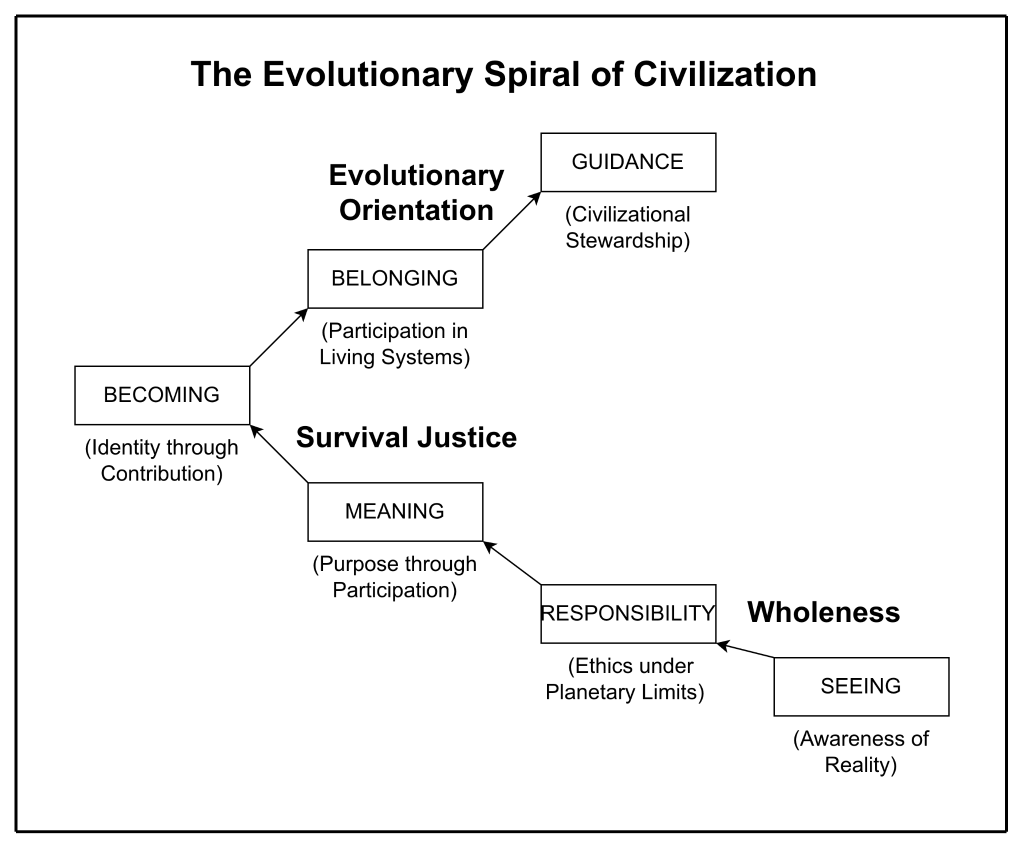
Figure 1. The Evolutionary Spiral of Civilization
Wholeness is the structure. Survival Justice is the moral threshold. Evolutionary Orientation is the developmental capacity that allows a civilization to cross it.
But these are not abstractions. They come alive in real stories:
• veterans healing through relationship with land
• farmers restoring soil and community resilience
• cities stewarding shared watersheds
• institutions and citizens coordinating energy resilience
• ordinary people discovering that responsibility creates meaning
Each chapter begins with lived experience—moments where participation deepens into belonging and systems begin to reorganize through relationship and stewardship. Together they trace a six-stage journey: seeing the world clearly, accepting responsibility for consequence, finding meaning through participation, becoming capable of stewardship, belonging consciously within the living Earth, and learning to guide what we are part of over time.
This is the work of our time. Not merely to invent more powerful technologies, but to become the kind of humans capable of guiding the power we already possess. The future will not be shaped by innovation alone, but by the maturity of the civilization that wields it.
This work draws from systems thinking, process philosophy, ecological economics, and contemporary developmental thought. It does not advance a new theory; it integrates enduring insights into a coherent orientation for action in a finite and interdependent world.
Humanity is beginning to recognize that we are part of a larger, living system—and that how we live now shapes what becomes possible.
The Survival Justice framework is not presented as a finished doctrine but as a living framework for inquiry. It is continuously co-created and refined through observation, reflection, dialogue, and participation. Grounded in the realities of living systems and informed by diverse experiences, it invites each generation to deepen—not merely inherit—our understanding of how humanity can flourish within a finite, interconnected world.
What follows is not a call to perfection, but an invitation to participation in the ongoing evolution of human belonging.
Evolution is no longer something that simply happens to us. It is something we must learn to guide.
Questions, reflections, or collaboration?
Email us at: hello@reearth.world
reEarth.world — practicing responsibility in a finite world
© 2026 Paul Carlson

