Learning Through Participation
Across communities, people are responding to real conditions—restoring soil, caring for water, strengthening local systems, and learning through practice.
These are not finished solutions.
They are ongoing efforts—where people act, adapt, and learn over time.
These examples are more than projects to observe.
They show how participation takes form in real places—how responsibility begins, develops, and is carried forward.
You are not outside these examples.
They are an invitation to recognize what is possible where you are.
→ Explore Learning Journeys
See how understanding becomes practice over time
Defiance, Ohio: Learning Across a Watershed
Located at the confluence of the Maumee and Auglaize Rivers, Defiance is a community where questions of water, agriculture, economic development, and environmental stewardship intersect in everyday life.
Over time, local leaders, educators, farmers, businesses, and community organizations have begun building connections across these traditionally separate domains. Rather than treating individual projects as isolated efforts, the community is increasingly exploring how learning can occur across initiatives and institutions.
Examples include Smart Water monitoring, soil health education, conservation partnerships, watershed planning, citizen science, community events, and emerging collaborations between local government, schools, nonprofits, and regional organizations.
One expression of this broader approach is the Land to Lake initiative, which seeks to strengthen connections between land management practices and downstream water quality throughout the Lake Erie watershed. By helping people see relationships across systems, Land to Lake supports a shared learning process that extends beyond any single project.
Defiance demonstrates how communities can become places of ongoing learning—where stewardship emerges through collaboration, experimentation, and long-term commitment to both people and place.
→ Explore Land to Lake (opens in new tab)
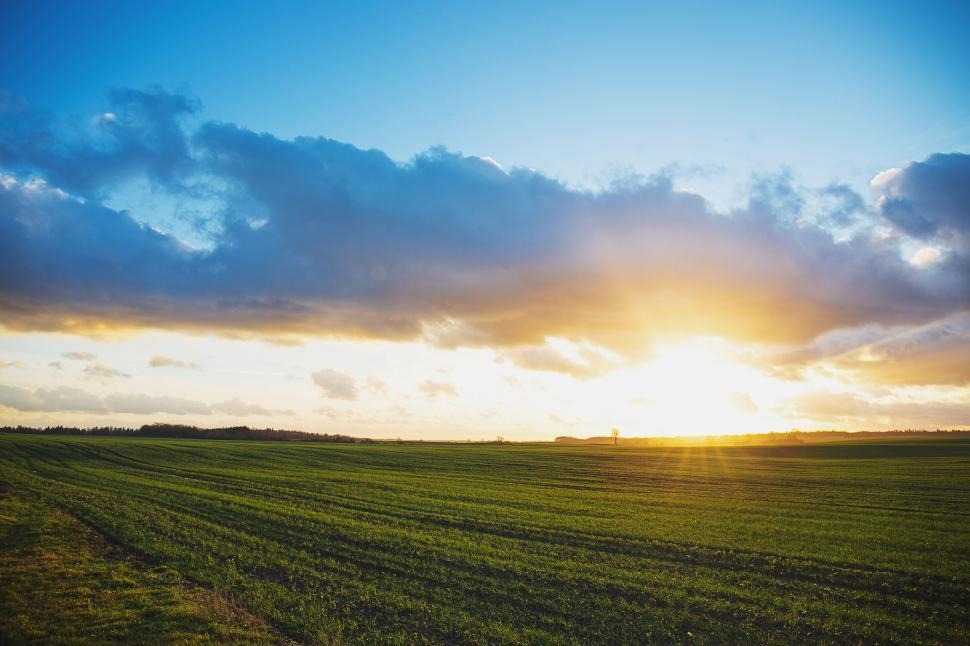
Soil Health Tours (2023–2024)
Field visits and shared learning across northwestern Ohio to rebuild soil and protect water.
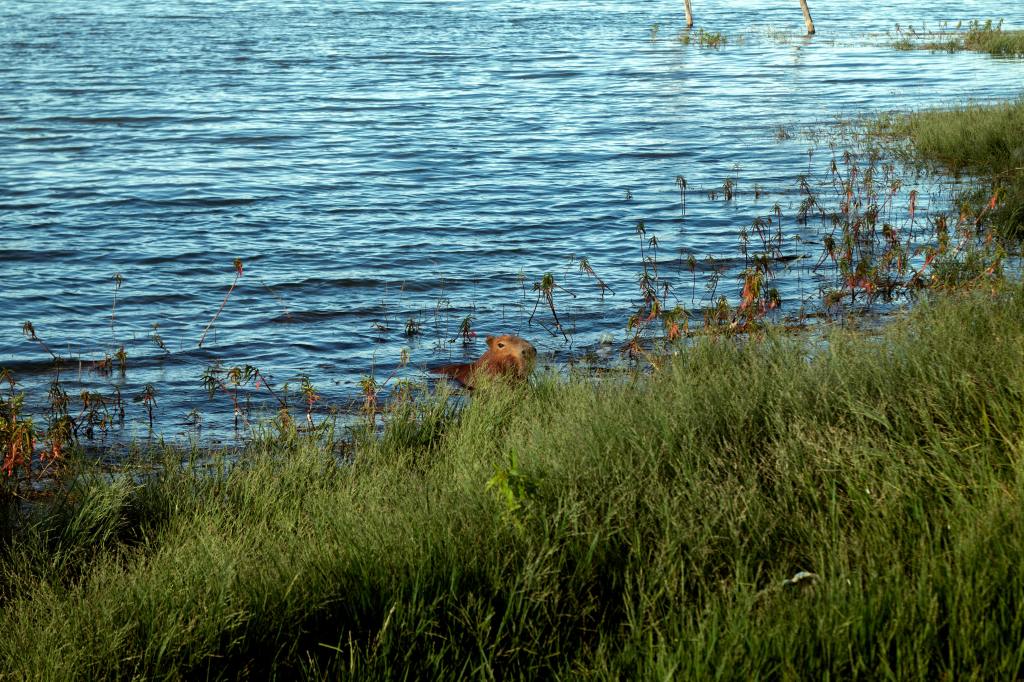
Smart Water in Defiance
A watershed collaboration blending data, stewardship, and adaptive learning to strengthen water resilience.
ALUS in Defiance County, Ohio
A farmer-led approach to restoring ecosystem services—connecting agricultural production with ecological regeneration through practical incentives and local coordination.
Community-based efforts offer another entry point—where learning begins not with large systems, but with people, relationships, and shared experience.
Learning Across Scales
Stewardship takes many forms and operates at different levels.
Some involve systems—watersheds, infrastructure, regional coordination.
Others emerge through communities, relationships, and shared experience.
Together, they show how learning unfolds across scales:
- within systems
- across regions
- through communities
- and in everyday life
Fairfield, Iowa — A Living Community System
A small city with global reach, Fairfield shows how entrepreneurship, infrastructure, culture, and civic life can evolve together over time.
What is happening here is not a single initiative, but a coordinated system—shaped across decades through relationships, investment, and shared direction.
The system in focus
Location: Fairfield, Iowa
Scale: community / regional
Pattern: distributed entrepreneurship, strong civic culture, long-term infrastructure investment
What is taking shape
- locally rooted, globally connected businesses
- early and sustained investment in digital infrastructure
- active civic participation and long-term planning
- a cultural environment that attracts people, ideas, and creativity
These elements reinforce one another—creating a system that sustains itself over time.
What is being learned
- small communities can operate as globally connected systems
- entrepreneurship can function as a primary economic engine
- culture acts as infrastructure—not decoration
- long-term coordination shapes outcomes across decades
Fairfield is not a model to copy.
It is a pattern to study.
Simply Living — Columbus, Ohio
Simply Living shows how participation begins at the community level—through relationships, shared experience, and everyday practice.
Rather than focusing on large-scale systems, it creates space for people to engage directly with ecological responsibility and community life.
The system in focus
Location: Columbus, Ohio
Scale: community
Pattern: participation, shared learning, local engagement
What is taking shape
Simply Living creates opportunities for people to engage at different levels:
- learning new practices
- connecting with others
- participating in local initiatives
- reflecting on how daily life connects to larger systems
These activities are often small in scale.
But they build awareness, relationships, and shared capacity over time.
What is being learned
Patterns emerge through ongoing engagement:
- community strengthens through shared experience
- learning deepens through participation
- small actions shift perception over time
- responsibility grows through involvement
Clarity does not come first.
It develops through participation.
These dynamics are not unique to one place.
They become visible across many community-based efforts.
They often remain invisible when viewed from above or below—
but come into focus within the relationships that connect them.
In this example
Simply Living reflects these patterns at the community level—
through relationships, shared experience, and everyday practice.
→ Visit Simply Living (external)
Across Ohio and beyond, individuals and communities are experimenting with practical ways of living more resiliently within ecological limits.
Watershed Stewardship — Seneca Lake, New York
Since 1991, the Seneca Lake Pure Waters Association has worked to protect one of the Finger Lakes through scientific monitoring, public education, partnership building, and long-term stewardship. What began as a small group of concerned citizens evolved into a regional network involving universities, government agencies, researchers, volunteers, and local communities.
Over more than three decades, Pure Waters helped establish watershed monitoring programs, harmful algal bloom detection efforts, stream assessments, remediation initiatives, and regional planning processes that continue to guide stewardship today.
The story of Seneca Lake illustrates a pattern visible across many successful initiatives: responsibility begins with attention, grows through participation and learning, and gradually develops into the capacity to steward complex living systems over time.
→ Learn more at Seneca Lake Pure Waters (opens in new tab)
Blue Rock Station — Philo, Ohio
Over time, some places become more than projects.
They become living environments for learning, experimentation, stewardship, and shared practice.
Blue Rock Station began as an effort to build differently—using reclaimed materials, renewable energy, ecological design, and hands-on experimentation. Over decades, it gradually evolved into something larger: a place where people learn resilience through participation, skill-building, community living, and relationship with the systems that sustain life.
Through workshops, internships, food forests, renewable energy education, and everyday practice, Blue Rock Station reflects how stewardship often develops slowly—through repeated engagement, adaptation, and care over time.
Seen through the lens of reEarth.world:
participation becomes formative, relationship becomes infrastructure, and learning emerges through lived experience within a changing world.
→ Explore Blue Rock Station (opens in new tab)
Blue Rock Farmland Commons — Stewardship Through Succession
After more than three decades of building Blue Rock Station into a nationally recognized center for sustainable living, Annie and Jay Warmke faced a challenge common to many successful initiatives:
How can stewardship continue beyond its founders?
Working with The Farmers Land Trust and the Women’s Peacepower Foundation, they began transitioning Blue Rock Station into the Blue Rock Farmland Commons. Their goal was not simply to transfer ownership, but to ensure that the land would remain accessible, regenerative, and available to future generations of land stewards.
The transition reflects a growing movement to place land into commons-based stewardship models that reduce financial barriers for new farmers while protecting the long-term ecological and educational purposes of the land.
A new farm family—Sarah and Jason Ricks and their children—are now continuing the work through regenerative agriculture, agroforestry, community learning, and ecological stewardship.
The story of Blue Rock Farmland Commons illustrates a deeper dimension of stewardship: not only caring for land during one’s lifetime, but creating the conditions for others to continue that care in the future.
→ Read: Changes Have Come to Blue Rock Station – Part 2 (opens in new tab)
Garden Stewardship — Ligonier, Pennsylvania
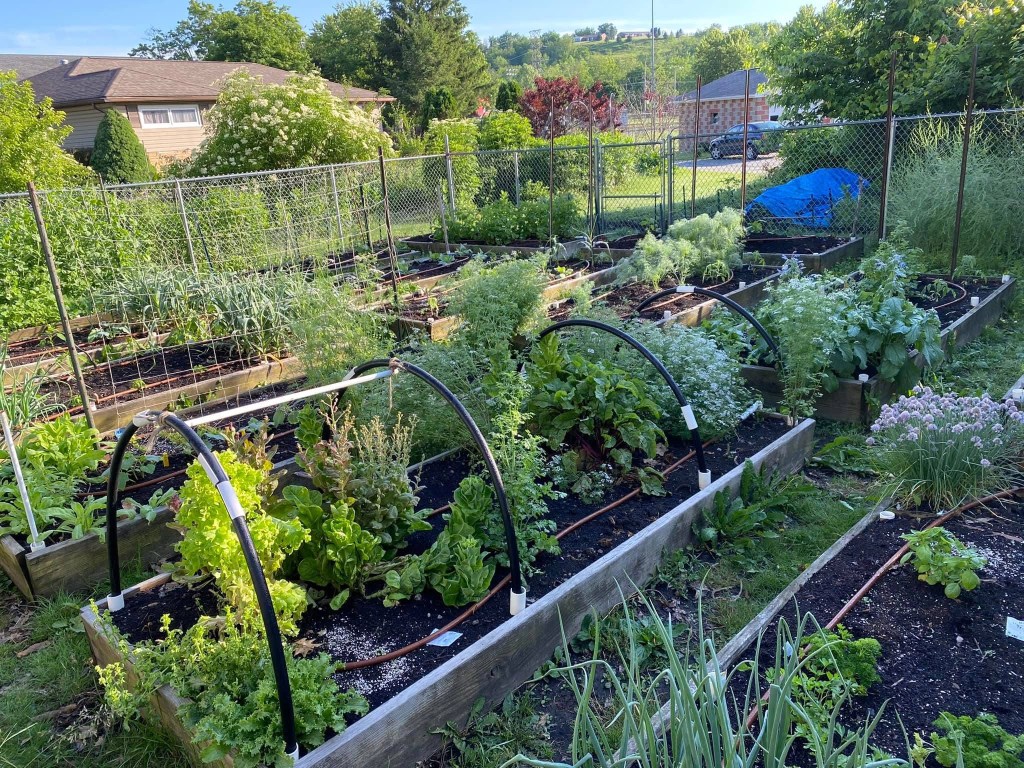
For more than twenty years, Dr. Rich Gosser and his family have been experimenting with forms of resilient and simple living grounded in care for land, water, food, and community.
What began as practical household decisions gradually became a long-term way of life:
solar energy,
rainwater harvesting,
wood heat,
food preservation,
and a bio-intensive raised-bed garden designed around permaculture principles.
The work is not driven by perfection or self-sufficiency, but by participation—learning how to live more carefully within ecological limits while maintaining a deeply meaningful and generous life.
Vegetables, fruit trees, compost systems, and food preservation practices provide nourishment for the household along with surplus to share with friends and neighbors.
As Rich describes it:
“We don’t pretend to model a ‘sustainable human lifestyle’ because, despite the frugality, it remains too dependent on an ‘oil based’ economy. We do intend to model something of a ‘transition’ to a less energy dependent manner of living while enjoying a ‘sufficiency’ and richly satisfying life.”
Here, stewardship takes shape not through large systems alone, but through long-term care, experimentation, and participation in everyday life.
→ Read the Full Living Example
Through the Lens of reEarth
- Wholeness — seeing life as interconnected
- Survival Justice — acting within shared responsibility
- Evolutionary Orientation — learning through participation over time
A Question to Carry
What becomes possible when community is treated not just as a place to live, but as a place to learn and act together?
Participate
Community-based efforts like this begin with simple steps—showing up, engaging, and contributing where possible.
→ Explore Participation Pathways
Contribute What You’re Learning
If you’re working on land, water, community resilience, or learning systems, we invite you to share what you’re doing and what you’re learning.
Stories can be early, imperfect, and in progress. What matters is honesty, responsibility, and the willingness to learn in public.
You might reflect on:
- What is the practice or project?
- Where is it located, and who is involved?
- What is it responding to?
- What are you trying, and what are you learning?
- What would you share with someone attempting something similar?
Sharing takes a few minutes. You’ll be invited to describe what you’re doing and what you’re learning.
→ Share a Living Example (opens in new tab)
Why this matters
These stories are not models to copy, but experiences to learn from—showing how responsibility, care, and adaptation unfold over time within living systems.
Practice first. Reflection second. Co-creation always.
Continue the learning:
→ Follow Learning Journeys
→ Explore the Civilizational Pathway
These examples are part of a growing body of work across regions and communities. Over time, patterns will be mapped and shared to support learning across places.
Each example reflects a specific place—but together they suggest something larger taking shape.
Questions, reflections, or collaboration?
Email us at: hello@reearth.world
reEarth.world — practicing responsibility in a finite world
© 2026 Paul Carlson

